Overview
Retargeting and tracking code settings let you add third-party scripts to a FlexiFunnels landing page. These scripts can support advertising pixels, analytics tools, conversion tracking, tag managers, and other tracking integrations.
Use these settings when a third-party platform provides code that must be added to the landing page so it can track page visits, visitor actions, conversions, or campaign performance.
Before You Begin
- Sign in to your FlexiFunnels account.
- Open the landing page where you want to add the tracking code.
- Copy the complete tracking or retargeting code from the third-party platform.
- Confirm the placement instructions provided by the third-party platform.
- Ensure you have permission to edit and publish the landing page.
Video Tutorial
Step 1: Open the Landing Page Editor
Open the FlexiFunnels landing page that requires the tracking or retargeting code. Select the page editor so you can access its page-level settings.
Step 2: Open Retargeting Code Settings
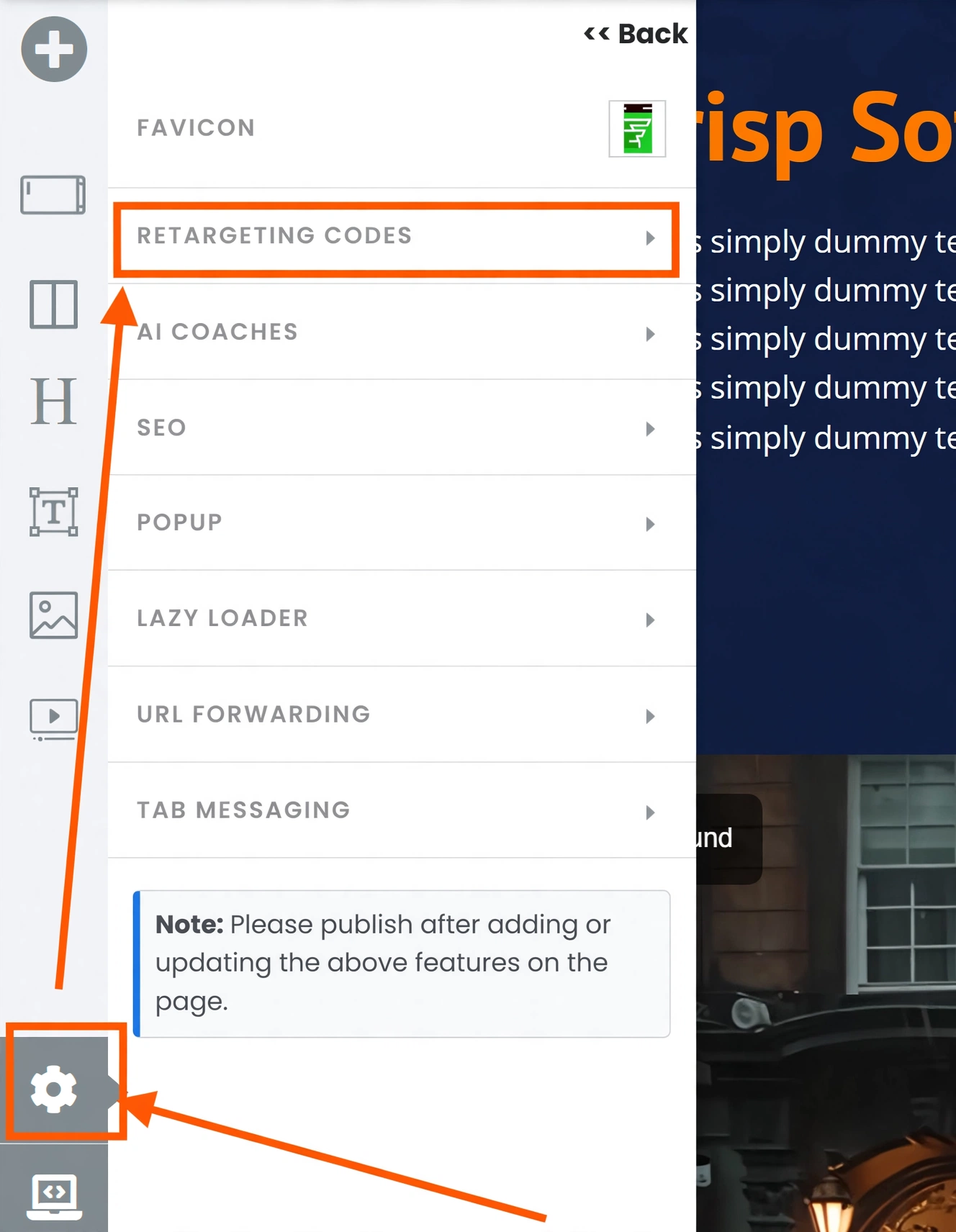
In the editor, locate and select the gear icon. The icon is typically available in the top toolbar or sidebar. In the settings panel, open Retargeting Code Settings.
Step 3: Add the Tracking Code
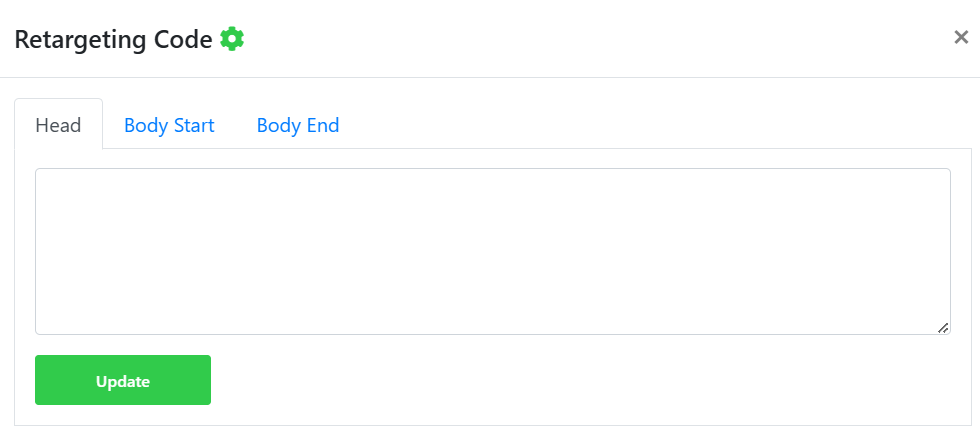
Paste the complete code supplied by your third-party platform into the appropriate placement field. Use the placement recommended by the platform to ensure that the script loads and tracks correctly.
Code Placement Options
- In the <head> section: Code in this location runs when the page begins loading. Use this placement for scripts that initialize variables or load libraries required from the start of the page.
- At the beginning of the <body>: Code in this location runs before most page content loads. Use it for functionality that must become available early in the page load process.
- At the end of the <body>: Code in this location runs after the HTML elements have loaded. This placement is useful for scripts that interact with page elements and can support page-load performance.
Important: Do not modify the code provided by the third-party platform unless that platform specifically instructs you to do so.
Step 4: Update and Publish the Landing Page
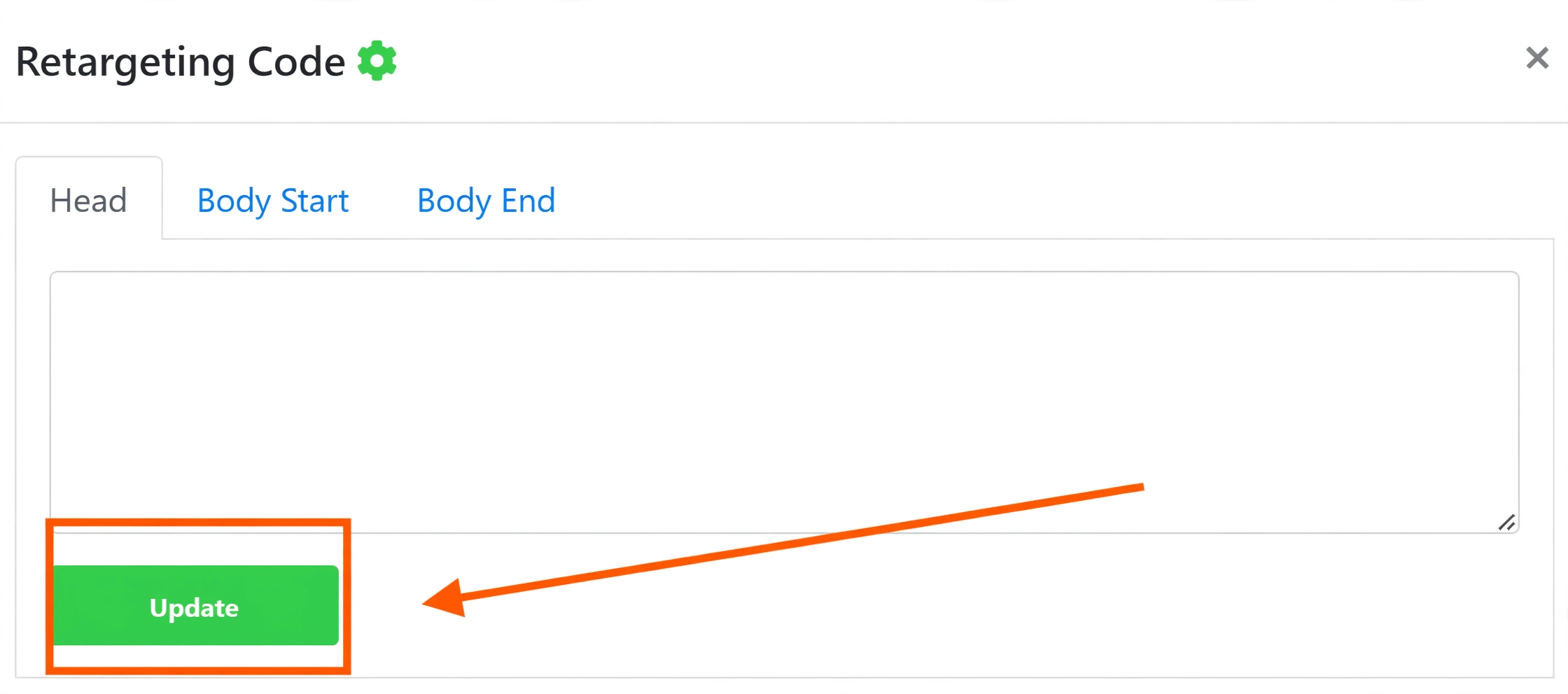
Select Update to save the tracking code configuration. Then publish the landing page so that the code is applied to the live page.
Verify the Configuration
Open the published landing page and verify the tracking setup using the third-party platform’s testing or diagnostics tool. Where applicable, perform a test action, such as submitting a form or completing a purchase, and confirm that the expected event is received by the tracking platform.
Common Scenarios
- Ad retargeting: Add an advertising pixel to build audiences from landing page visitors.
- Conversion tracking: Track form submissions, checkout actions, or purchases from a marketing campaign.
- Analytics: Add an analytics script to measure page visits, traffic sources, and visitor behavior.
- Tag management: Add a tag manager container to manage multiple tracking scripts from one platform.
- Campaign reporting: Track visitor actions after they arrive through a paid advertisement, email, or social media campaign.
Best Practices
- Use the exact code supplied by the third-party platform.
- Follow the platform’s recommended code placement instructions.
- Add only the scripts required for the landing page to avoid unnecessary page-load impact.
- Test tracking on the published page after every code change.
- Document the purpose and provider of each script added to the page.
- Review your tracking configuration when changing campaigns or replacing third-party tools.
- Ensure your tracking implementation complies with applicable privacy and consent requirements.
Before Contacting Support
- Confirm that the correct landing page is selected in the editor.
- Verify that the full tracking code was copied without changes.
- Check that the code is in the placement recommended by the third-party platform.
- Select Update and publish the latest page version.
- Test the published URL rather than the editor preview.
- Use the third-party platform’s diagnostics tool to check for received events.
Expected Outcome
After saving and publishing the page, the configured third-party tracking or retargeting code loads on the live landing page from the selected placement. The connected platform can then record the configured page visits and visitor actions.
Membership Thank You Page Tracking
To add retargeting or tracking code to a Membership Thank You page, use the settings described in the following article:
Related Articles
- Tracking code in Membership Thank You page
- Publishing a FlexiFunnels landing page
- Managing landing page settings in FlexiFunnels
Was this article helpful?
That’s Great!
Thank you for your feedback
Sorry! We couldn't be helpful
Thank you for your feedback
Feedback sent
We appreciate your effort and will try to fix the article